


How Cleaning Practices can Help Prolong Food Shelf Life?
Keeping food fresh is usually associated with refrigeration, airtight containers, expiration dates, and proper storage temperatures. Achieving this goal is almost close to having a fresh start home cleaning as everything in your pantry looks tidy, and nice. However, the condition of the surrounding environment also influences how well food can be preserved. A clean kitchen, refrigerator, pantry, and food-preparation area can reduce contamination risks, discourage pests, and prevent accumulated residues from creating conditions that compromise food quality.
Regular household cleaning cannot stop food from naturally spoiling, and it does not replace proper refrigeration or safe food-handling practices. Instead, it supports these measures by maintaining a sanitary environment. When cleaning becomes part of a consistent food-storage routine, households can reduce avoidable sources of contamination and create better conditions for protecting their groceries.
Clean Refrigerators Help Protect Stored Food
The refrigerator is one of the most important areas to keep clean because it holds foods with different storage requirements. Spills from raw meat, seafood, dairy products, fruits, or prepared meals can spread contamination if they remain on shelves or in drawers.
Cleaning the refrigerator regularly helps remove these residues before they become persistent sources of bacteria or unpleasant odors. Shelves, drawers, door compartments, and interior surfaces should be cleaned according to the manufacturer’s recommendations. Spills should be addressed promptly rather than allowed to dry and accumulate.
A clean refrigerator therefore provides a better foundation for proper food storage, while maintaining the correct temperature remains essential for controlling spoilage and bacterial growth.
Kitchen Surfaces Influence Food Safety
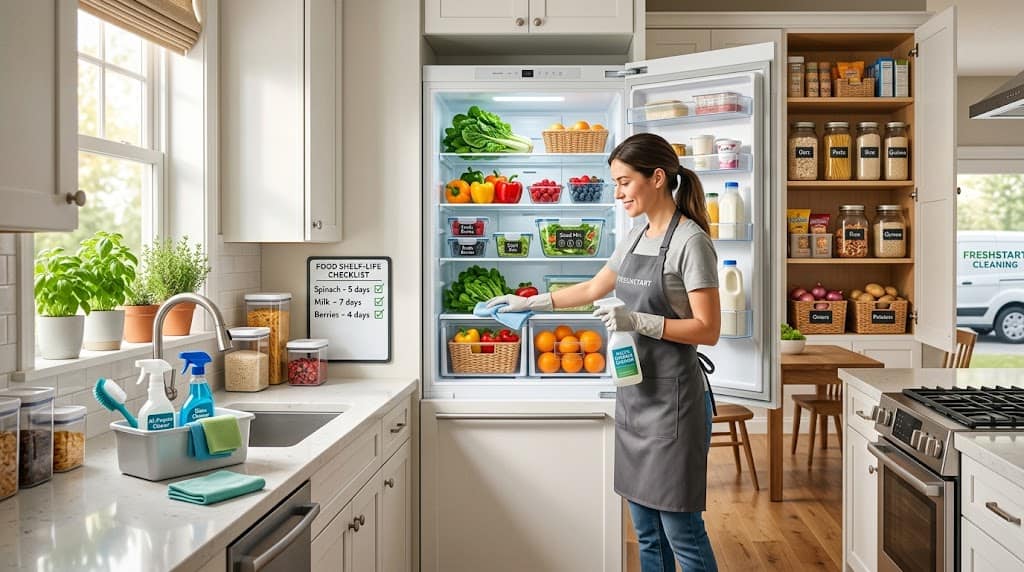
Countertops, cutting boards, sinks, handles, and other frequently touched surfaces can collect food particles and microorganisms throughout the day. Without regular cleaning, these areas can become points where contaminants are transferred between ingredients, utensils, hands, and prepared foods.
Cleaning should focus particularly on surfaces used for food preparation. After handling raw ingredients, appropriate cleaning and sanitation procedures can help reduce the risk of transferring harmful microorganisms to foods that will be eaten without further cooking.
Kitchen appliances also require attention. Microwave interiors, refrigerator handles, oven surfaces, coffee machines, and other frequently used equipment can accumulate grease, crumbs, and food residue. Removing this buildup helps maintain a more hygienic food-preparation environment.
The objective is not to create a sterile kitchen. Rather, consistent cleaning removes accumulated food residues and reduces opportunities for contamination to spread.
Pantry and Cabinets Need Regular Maintenance
Dry foods can remain usable for extended periods when stored correctly, but pantry cleanliness still matters. Crumbs, spilled grains, flour, sugar, and other food particles can attract insects and rodents. Pest activity can damage packaging and potentially contaminate nearby products.
Regular pantry maintenance should include wiping shelves, removing spilled ingredients, checking packaging for damage, and rotating older products toward the front.
Food should generally remain in sealed packaging or appropriate airtight containers when practical.
Cleaning also provides an opportunity to inspect stored products. Unusual odors, damaged packaging, moisture, mold, or signs of pests can indicate that food should be discarded. Addressing these problems early can prevent contamination from spreading to other stored items.
Cabinet cleanliness is similarly important. Areas around food containers can collect dust and residue over time, particularly when ingredients are frequently removed and replaced.
Preventing Odors, Moisture, and Pest Problems
Food odors and moisture can create additional challenges in kitchens and storage areas. Persistent moisture can encourage mold growth, while food residue can attract pests. Neither problem is desirable in an environment where groceries are stored or prepared.
Routine cleaning should therefore include areas that are easy to overlook, such as beneath appliances, around refrigerator seals, behind trash bins, inside cabinet corners, and around sinks. Removing organic residue and keeping damp areas dry can help reduce conditions that encourage unwanted biological growth and pests.
Waste management is another important component. Food scraps should not be allowed to accumulate unnecessarily, particularly in warm indoor environments. Regularly emptying garbage containers and cleaning bins helps control odors and discourages insects.
These practices support food storage indirectly by keeping the environment less favorable to contamination and pest activity.
Combining Cleaning with Proper Food Storage
Household cleaning works best as part of a broader food-preservation routine. Refrigerators should operate at appropriate temperatures, perishable foods should be stored promptly, packaging should protect food from moisture and air where appropriate, and consumers should follow product storage instructions.
Cleaning contributes by maintaining the spaces where these practices occur. A spotless refrigerator cannot compensate for unsafe temperatures, just as clean countertops cannot make spoiled food safe to eat. Food shelf life ultimately depends on factors such as temperature, moisture, packaging, acidity, processing, and the characteristics of the food itself.
A practical routine combines these elements: clean spills immediately, inspect the refrigerator and pantry regularly, maintain food-contact surfaces, control moisture, manage household waste, and organize stored products so older items are used appropriately.
Building a Cleaner Foundation for Fresher Food
Extending food shelf life is not achieved through one cleaning method or product. It is the result of proper storage, temperature control, safe handling, and environmental cleanliness working together.
A fresh start for the home therefore has practical value beyond appearance. Maintaining clean refrigerators, countertops, cabinets, sinks, and storage areas reduces avoidable sources of contamination and helps households identify food-storage problems earlier. When these habits become part of routine kitchen management, cleaning becomes a supporting component of food preservation, helping create a safer, more organized environment where food can remain fresh for its intended storage period.
 While many contend that eating pasta regularly meet the standards of healthy eating as pasta dishes come complete well balanced meals, Yet dietitians warn that never-ending pasta consumption could wreak havoc on one’s health because having too much of certain dietary factors can lead to undesirable side effects.
 Traditional pasta poses as a rich source of carbohydrates, but consuming large portions regularly and frequently could fill up your body with too many carbs. According to recent studies, high-carb diets have been linked to the development of diabetes; particularly if lifestyle choices and family history are factored in as influencing factors.
 When it comes to outdoor cooking, there’s a lot more to consider than just the grill and the ingredients. Creating the perfect ambiance and ensuring a comfortable cooking environment can elevate your culinary experience to new heights. One way to achieve this is by incorporating Corten screens from https://www.luxuryscreens.co.uk/product-category/metal-screens/corten-screens/ into your outdoor cooking area.
 What makes spaghetti bolognese different from spaghetti sauce is that the bolognese recipe uses fresh ingredients, which makes the sauce taste bright. It’s an
  In medium heat, add olive oil in a saucepan and fry the bacon until crispy and golden brown.




 A good kitchen experience goes beyond great ingredients and recipes. While most people focus on appliances and layout, many overlook how the home’s roofing affects the cooking environment. Nor’East Exteriors protects your home, and when properly maintained, it also helps create a more comfortable and safe kitchen.


 In conclusion, cooking in a small apartment may seem challenging, but with the right approach and some clever kitchen hacks, you can indulge in delicious homemade meals. Remember to stay organized, simplify your recipes, and embrace creative cooking techniques. With these easy apartment cooking tips and mouthwatering recipes, you’ll turn your limited kitchen space into a culinary haven. So, get ready to whip up some culinary masterpieces and impress your friends and loved ones with your creative cooking skills.


 Step aside, pizza and burgers; there’s a new star in town, twirling its way into the hearts and stomachs of millions. We’re talking about pasta, the versatile carb that has taken TikTok by storm. Explore TikTok pasta recipes’ exciting and chaotic world, where creativity knows no bounds. Transforming regular noodles into mouthwatering masterpieces, get ready to don your apron and enjoy a memorable pasta party!
 Cooking is not just about satisfying your hunger or feeding your family. It is a ritual that can bring meaning and purpose to your daily life. In fact, cooking has spiritual significance that can nourish both your body and soul. In this article, we will explore the spiritual meanings behind cooking and how it can deepen your connection with yourself and the world around you.


 Simply put, the kitchen is a source of life, in which energies flow and vibrate but must be directed in such a way that balance will be maintained to benefit all members of the household. Proper communication in discussing meals is of great importance but it also helps that preparations take place inside a space where only positive energies flow and vibrate inside the kitchen.
 While many prefer to use subdued hues as main colours of the kitchen, lemon yellow, lime green and orange are also perfect colors for a kitchen. Mainly for the reason that they symbolize nourishment and at the same time reflecting the energetic colors of flames. On that note, it is not advisable to use grey, blue and black as main kitchen colors.


 Apparently, Dutch designers have increasingly taken over as leaders in the design and development of kitchens, while their works are constantly being compared to the classic kitchen designs developed by German and Italian architects. As most homes in EU countries have limited spaces, the galley-style arrangement of a Dutch kitchen is a perfect fit.
 This specifically refers to the famous blue and white pottery manufactured in the city of Delft, as opposed to Delftware, which are Delft-made but come in different colors.
 An inspector might need to visit a restaurant’s building regularly to check for potential issues. Inspectors often go into the building during the inspection process and speak with managers about any general concerns for the restaurant.