


How Cleaning Practices can Help Prolong Food Shelf Life?
Keeping food fresh is usually associated with refrigeration, airtight containers, expiration dates, and proper storage temperatures. Achieving this goal is almost close to having a fresh start home cleaning as everything in your pantry looks tidy, and nice. However, the condition of the surrounding environment also influences how well food can be preserved. A clean kitchen, refrigerator, pantry, and food-preparation area can reduce contamination risks, discourage pests, and prevent accumulated residues from creating conditions that compromise food quality.
Regular household cleaning cannot stop food from naturally spoiling, and it does not replace proper refrigeration or safe food-handling practices. Instead, it supports these measures by maintaining a sanitary environment. When cleaning becomes part of a consistent food-storage routine, households can reduce avoidable sources of contamination and create better conditions for protecting their groceries.
Clean Refrigerators Help Protect Stored Food
The refrigerator is one of the most important areas to keep clean because it holds foods with different storage requirements. Spills from raw meat, seafood, dairy products, fruits, or prepared meals can spread contamination if they remain on shelves or in drawers.
Cleaning the refrigerator regularly helps remove these residues before they become persistent sources of bacteria or unpleasant odors. Shelves, drawers, door compartments, and interior surfaces should be cleaned according to the manufacturer’s recommendations. Spills should be addressed promptly rather than allowed to dry and accumulate.
A clean refrigerator therefore provides a better foundation for proper food storage, while maintaining the correct temperature remains essential for controlling spoilage and bacterial growth.
Kitchen Surfaces Influence Food Safety
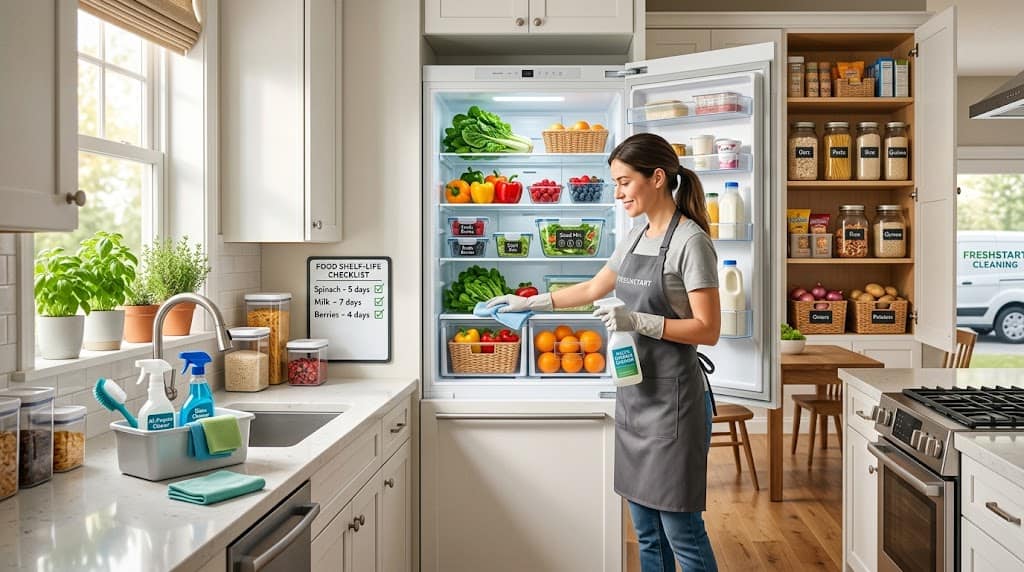
Countertops, cutting boards, sinks, handles, and other frequently touched surfaces can collect food particles and microorganisms throughout the day. Without regular cleaning, these areas can become points where contaminants are transferred between ingredients, utensils, hands, and prepared foods.
Cleaning should focus particularly on surfaces used for food preparation. After handling raw ingredients, appropriate cleaning and sanitation procedures can help reduce the risk of transferring harmful microorganisms to foods that will be eaten without further cooking.
Kitchen appliances also require attention. Microwave interiors, refrigerator handles, oven surfaces, coffee machines, and other frequently used equipment can accumulate grease, crumbs, and food residue. Removing this buildup helps maintain a more hygienic food-preparation environment.
The objective is not to create a sterile kitchen. Rather, consistent cleaning removes accumulated food residues and reduces opportunities for contamination to spread.
Pantry and Cabinets Need Regular Maintenance
Dry foods can remain usable for extended periods when stored correctly, but pantry cleanliness still matters. Crumbs, spilled grains, flour, sugar, and other food particles can attract insects and rodents. Pest activity can damage packaging and potentially contaminate nearby products.
Regular pantry maintenance should include wiping shelves, removing spilled ingredients, checking packaging for damage, and rotating older products toward the front.
Food should generally remain in sealed packaging or appropriate airtight containers when practical.
Cleaning also provides an opportunity to inspect stored products. Unusual odors, damaged packaging, moisture, mold, or signs of pests can indicate that food should be discarded. Addressing these problems early can prevent contamination from spreading to other stored items.
Cabinet cleanliness is similarly important. Areas around food containers can collect dust and residue over time, particularly when ingredients are frequently removed and replaced.
Preventing Odors, Moisture, and Pest Problems
Food odors and moisture can create additional challenges in kitchens and storage areas. Persistent moisture can encourage mold growth, while food residue can attract pests. Neither problem is desirable in an environment where groceries are stored or prepared.
Routine cleaning should therefore include areas that are easy to overlook, such as beneath appliances, around refrigerator seals, behind trash bins, inside cabinet corners, and around sinks. Removing organic residue and keeping damp areas dry can help reduce conditions that encourage unwanted biological growth and pests.
Waste management is another important component. Food scraps should not be allowed to accumulate unnecessarily, particularly in warm indoor environments. Regularly emptying garbage containers and cleaning bins helps control odors and discourages insects.
These practices support food storage indirectly by keeping the environment less favorable to contamination and pest activity.
Combining Cleaning with Proper Food Storage
Household cleaning works best as part of a broader food-preservation routine. Refrigerators should operate at appropriate temperatures, perishable foods should be stored promptly, packaging should protect food from moisture and air where appropriate, and consumers should follow product storage instructions.
Cleaning contributes by maintaining the spaces where these practices occur. A spotless refrigerator cannot compensate for unsafe temperatures, just as clean countertops cannot make spoiled food safe to eat. Food shelf life ultimately depends on factors such as temperature, moisture, packaging, acidity, processing, and the characteristics of the food itself.
A practical routine combines these elements: clean spills immediately, inspect the refrigerator and pantry regularly, maintain food-contact surfaces, control moisture, manage household waste, and organize stored products so older items are used appropriately.
Building a Cleaner Foundation for Fresher Food
Extending food shelf life is not achieved through one cleaning method or product. It is the result of proper storage, temperature control, safe handling, and environmental cleanliness working together.
A fresh start for the home therefore has practical value beyond appearance. Maintaining clean refrigerators, countertops, cabinets, sinks, and storage areas reduces avoidable sources of contamination and helps households identify food-storage problems earlier. When these habits become part of routine kitchen management, cleaning becomes a supporting component of food preservation, helping create a safer, more organized environment where food can remain fresh for its intended storage period.

 It may have happened to all people that stainless steel is not exactly stainless. It is definitely highly resistant to permanent stains, but nothing is really stainless. On the other hand, most discoloration on stainless steel can be taken off. Some spots, such as water, are usually patched with a simple shift in the washing system. Others involve a comparatively powerful cleanser and some scrubbing. However, with appropriate care and upkeep, stainless steel cookware may last a lifetime. And if they place in only a little additional effort, it is possible to keep it looking nearly new for the life span of this cookware. Check out hoover fd22g Prezzo to learn more about cleaning services and tools.
